









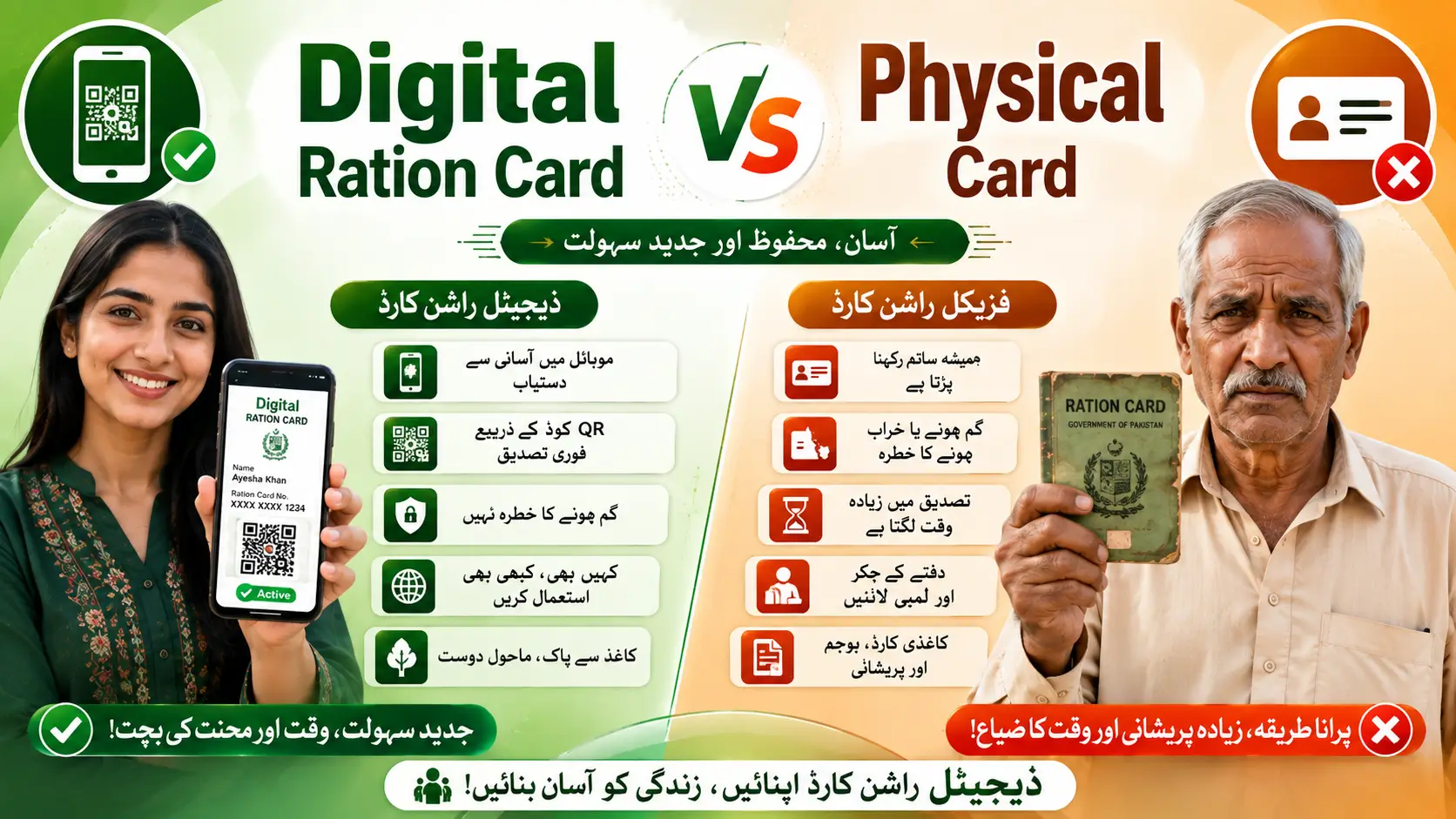
The Digital Ration Card vs Physical Card discussion has become important for families in Punjab as the ration subsidy system moves from traditional paper-based methods toward digital verification and electronic assistance. Instead of depending completely on physical cards, manual registers, and distribution slips, the newer model uses household data, CNIC verification, and digital records.
Many people searching for Ration Card online check Punjab, Ration Card Punjab online apply, Ration Card eligibility check, and PSER Ration Card want to understand how the updated system works. The main difference is simple: the old system depended heavily on physical documents, while the newer approach focuses on digital identification and data-based eligibility.
Digital Ration Card vs Physical Card: What Changed?
The traditional ration card system was designed around physical documents. Beneficiaries usually had to carry a card or receipt and visit a designated distribution point to collect ration.
The modern digital approach aims to make the process easier by connecting beneficiary information with government databases. CNIC information can be used for identification, while household data and socioeconomic information help determine eligibility.
This shift can reduce paperwork and make it easier for applicants to check their status without repeatedly visiting government offices.
What Was the Physical Ration Card System?
Under the older system, ration assistance commonly depended on paper documentation and manual record keeping. A beneficiary might have to:
- Carry a physical ration card
- Visit a distribution center
- Show documents for verification
- Wait in a queue
- Collect a predefined ration package
- Get the transaction recorded manually
Although this method provided direct food assistance, it also created several administrative challenges.
Manual records could contain mistakes, duplicate entries were harder to identify, and beneficiaries had limited ways to track their subsidy history. In some situations, people also had to make repeated visits just to ask about their application or ration status.
What Is the Digital Ration Card System?
The digital ration card model is based on electronic records and identity verification. Instead of relying entirely on a paper card, the beneficiary’s information can be connected with a government-managed database.
Under this approach, the process may include:

- CNIC-based identification
- Digital household information
- PSER-based socioeconomic screening
- Online status checking
- Electronic subsidy records
- Transaction monitoring through registered systems
For applicants, this means the Ration Card Punjab online apply process and subsequent status checks can be more convenient than the traditional paper-based procedure.
Digital Ration Card vs Physical Card: Key Differences
Understanding the difference between the two systems makes the new process much easier to follow.
1. Verification Method
Physical Card:
- Manual document checking
- Paper records
- Physical card inspection
- Local verification
Digital Card:
- CNIC-based identification
- Electronic records
- PSER screening
- Database verification
The digital method is designed to reduce dependence on paperwork and make eligibility screening more systematic.
2. Subsidy Distribution
With the physical model, beneficiaries generally received specific ration items or packages through designated distribution channels.
The digital model can provide a subsidy or balance that is recorded electronically. Where the program supports digital purchasing, beneficiaries can use the available assistance through participating merchants according to the program’s rules.
This can give families greater flexibility compared with receiving exactly the same physical package every time.
3. Transparency and Tracking
One of the biggest advantages of digitization is record keeping.

A physical system may provide limited information about previous transactions. A digital system, on the other hand, can maintain electronic records that make it easier for authorized systems to monitor payments, purchases, and beneficiary activity.
This can also help authorities identify duplicate records and improve monitoring.
4. Checking Application Status
Previously, applicants often had to contact a local office to find out whether their ration assistance was approved.
Today, applicants may be able to use options such as:
- Ration Card online check Punjab
- CNIC-based verification
- Online status portals
- SMS services
- Government helplines
- Registration centers
The exact checking method depends on the official system available for the relevant program.
Who May Qualify for a Digital Ration Card?
Eligibility is generally linked to household circumstances and government screening rather than simply owning a CNIC.
Potential requirements may include:
- Being a resident of Punjab
- Having a valid CNIC
- Household registration in the relevant government database
- Meeting the applicable socioeconomic criteria
- Passing the required eligibility assessment
- Providing accurate family information
Applicants should remember that eligibility rules can change when a government program is updated. Therefore, claims about income limits, PMT scores, or other thresholds should always be checked against the latest official announcement.
What Is the Rs. 3,000 Ration Subsidy?
The term Rs. 3,000 ration card is commonly used to describe a monthly ration subsidy associated with Punjab’s ration assistance initiatives.

Where this amount applies, approved households may receive assistance intended for eligible grocery purchases. The support is not necessarily the same as receiving cash for unrestricted spending. Program rules can specify where and how the subsidy may be used.
Before assuming that every applicant will receive Rs. 3,000, check the current official eligibility and payment announcement.
How to Perform Ration Card Online Check Punjab
If you have already submitted an application, the first step is to use the official government platform associated with the program.
A typical checking process may involve:
- Open the official portal.
- Select the relevant ration card or subsidy service.
- Enter your CNIC information.
- Complete the required verification.
- Submit the request.
- Review your eligibility or application status.
If an online option is unavailable, applicants may need to use the official helpline or visit an authorized registration center.
What Is BOP Ration Card Online Check?
Some government subsidy initiatives may use banking infrastructure to process or record financial assistance. This is why people may search for BOP Ration Card online check when trying to confirm a subsidy or transaction.
Where Bank of Punjab services are officially connected to a particular program, beneficiaries may be able to check relevant payment or account information through the authorized banking channel.
However, bank involvement does not automatically mean that everyone with a ration card has a BOP account. Always follow the instructions issued for your specific program.
PSER Ration Card and Eligibility Screening
The PSER Ration Card process is important because socioeconomic information can be used to identify households that meet the government’s assistance criteria.

Applicants should provide accurate information about their household, income, assets, and other requested details. Incorrect information can create verification problems or affect eligibility.
A successful registration does not automatically guarantee approval. The final decision depends on the applicable government screening criteria.
Is the Digital Ration Card Better Than the Physical Card?
For most administrative purposes, the digital model offers several practical advantages.
Digital system benefits include:
- Less dependence on paper
- Easier identity verification
- Better record keeping
- More convenient status checking
- Improved transaction monitoring
- Reduced chances of duplicate records
- Faster access to digital information
The physical card can still be useful as a reference document where a program requires it, but the overall welfare system is increasingly moving toward digital verification.
Ration Card Helpline and Safety Tips
If you have a problem with registration or verification, use only the contact details published through official government channels.
Never give your:
- CNIC photograph to unknown people
- OTP to callers
- ATM PIN
- Bank password
- Mobile banking credentials
Registration for government welfare programs should not require you to pay an unknown person for guaranteed approval.
FAQs About Digital Ration Card vs Physical Card
1. What is the difference between a digital and physical ration card?
A physical ration card relies on a paper document, while a digital ration system uses electronic records and identity verification. Digital systems can also make tracking and status checking easier.

2. How can I check my ration card status in Punjab?
You can use the official government portal or other officially announced verification methods. Depending on the program, CNIC, SMS, helpline, or registration-center services may be available.
3. Who can qualify for a digital ration card?
Eligibility depends on the current government criteria. Applicants may need a valid CNIC, Punjab residency, household registration, and successful socioeconomic screening.
4. Is the Rs. 3,000 ration subsidy guaranteed for everyone?
No. Any stated subsidy amount applies only where it is officially announced for an eligible program. Approval depends on the applicable eligibility and verification rules.
5. Is a physical ration card still required?
Not necessarily. Some digital programs may use CNIC and electronic records instead of relying on a physical card. Applicants should follow the requirements of the specific government program.
Conclusion
The move from paper-based ration cards toward digital subsidy systems represents an important change in how welfare assistance can be managed. The Digital Ration Card vs Physical Card difference is mainly about how beneficiaries are identified, verified, monitored, and provided with assistance.
The older model relied on physical documents and manual distribution, while the newer approach focuses on CNIC verification, digital records, socioeconomic screening, and online status services.
For applicants in 2026, the most important step is to keep household information accurate and use official channels for registration and verification. Avoid relying on social media claims about guaranteed payments, fixed eligibility thresholds, or unofficial registration services.