








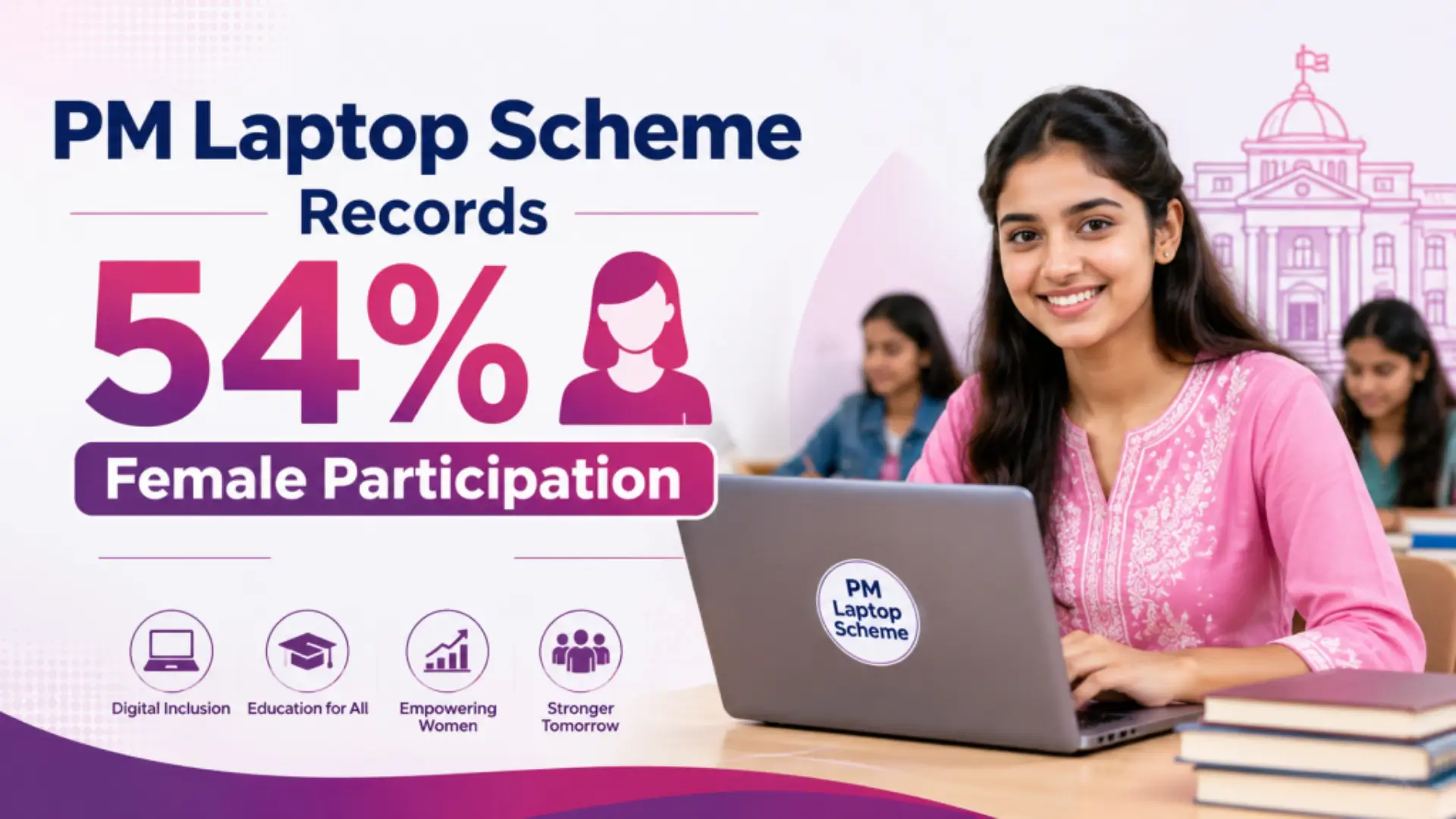
Records 54% Female Participation. The Prime Minister’s Laptop Scheme has achieved a notable milestone, with 54% female participation recorded as of April 2026, according to the latest Pakistan Economic Survey 2026 released on Thursday, 11 June 2026.
The survey highlights that under the program, a total of 74,427 laptops were distributed among 407,713 students enrolled across 156 higher education institutions throughout Pakistan. These institutions include universities and colleges from Punjab, Sindh, Khyber Pakhtunkhwa, Balochistan, the Federal Territory, Azad Jammu and Kashmir, and Gilgit-Baltistan.

Growing Female Participation in Digital Education
The report’s most significant finding is the 54% share of female students benefiting from the scheme. This is particularly important in the context of Pakistan’s ongoing gender gap in education. According to the survey, male literacy stands at 73.0%, while female literacy remains at 54.0%, reflecting a substantial disparity.

Despite these challenges, the data suggests that more women are now entering higher education and gaining access to digital learning tools. The laptop scheme appears to be contributing to narrowing the gap by enabling female students to participate more actively in academic and research activities.

Impact on Higher Education and Digital Access
Experts note that targeted initiatives like the laptop scheme can play a role in improving digital inclusion for women, especially in regions where access to technology is limited. By providing laptops to students, the program supports online learning, research work, and skill development in an increasingly digital academic environment.

Policy Context and Future Outlook
The findings were released just one day ahead of the Budget 2026–27, raising expectations that digital education and youth development programs may receive greater focus in upcoming fiscal planning.

However, analysts also emphasize that laptop distribution alone is not enough to address Pakistan’s broader education challenges. Improvements are still needed in areas such as internet infrastructure, university quality, digital literacy training, and girls’ school education.
Conclusion
While challenges remain, the 54% female participation rate in the PM Laptop Scheme signals a positive shift toward greater inclusion of women in higher education and technology access. It reflects gradual progress in bridging the gender gap and strengthening Pakistan’s digital education landscape.