



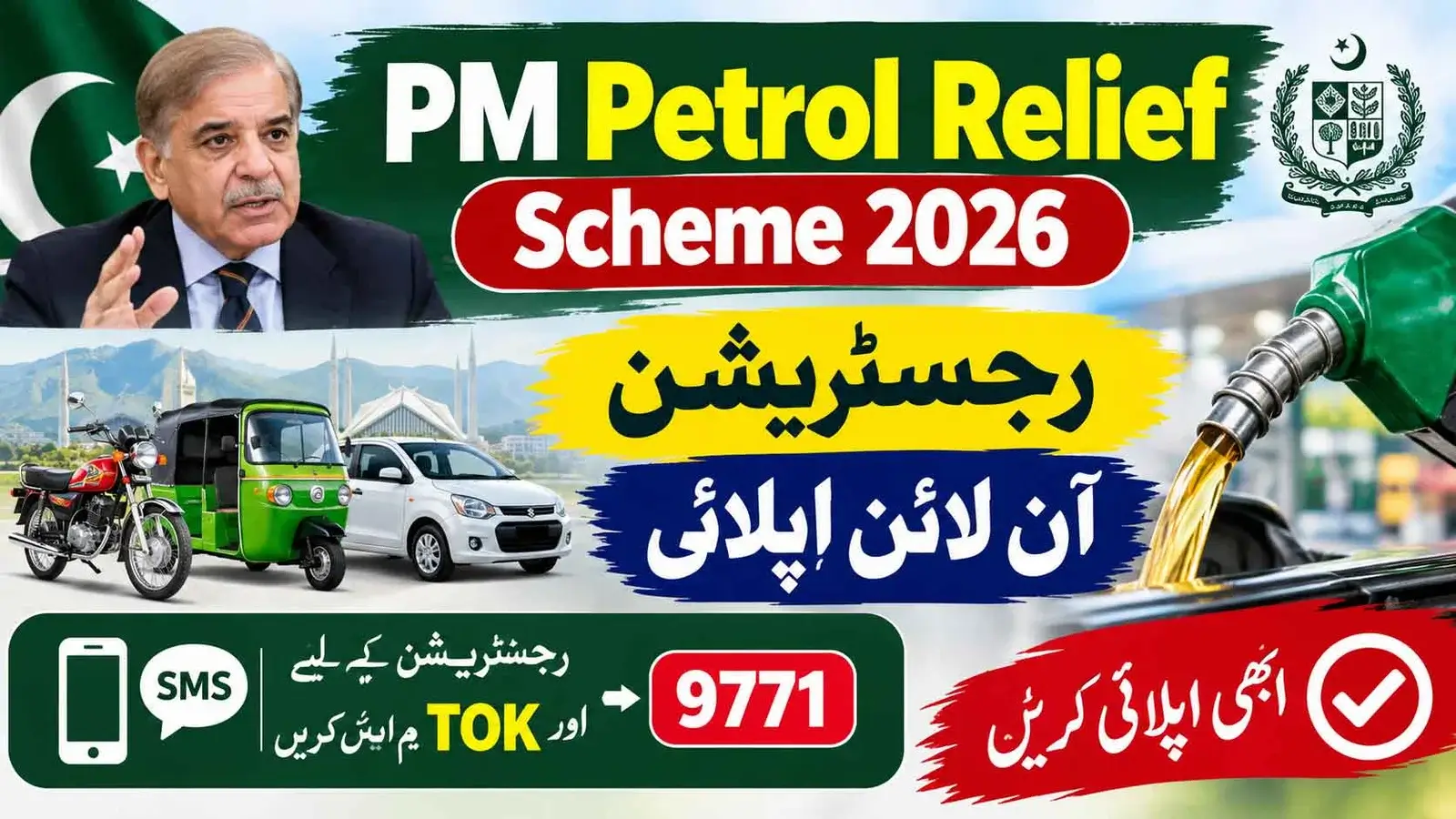
The PM Petrol Relief Scheme 2026 has been introduced to provide financial support to people facing the impact of higher petrol prices. Under the announced programme, eligible users can receive Rs.100 per litre petrol relief within a fixed monthly fuel quota.
The scheme mainly focuses on people using motorcycles, rickshaws, Qingqi rickshaws, eligible two- and three-wheelers, and small cars with engines of up to 800cc. The government has also introduced a digital system and SMS-based registration process to make the relief easier to access.

If you want to know who can qualify, how to register through 9771, what TOK means, and how much relief you may receive, the key information is explained below.
PM Petrol Relief Scheme 2026 Eligibility
The petrol subsidy is not available to every vehicle owner. The government has specified particular vehicle categories and conditions for receiving the relief.

Eligible categories include:
- Motorcycles
- Rickshaws
- Qingqi rickshaws
- Eligible two-wheelers
- Eligible three-wheelers
- Cars with an engine capacity of up to 800cc
The programme is intended for non-commercial users, and the announced conditions limit the relief to one vehicle per user or owner.

Owners of larger cars or vehicles that do not fall within the approved categories should not assume that they are automatically eligible.
Rs.100 Per Litre Petrol Relief
The biggest feature of the PM Petrol Relief Scheme 2026 is the announced Rs.100 per litre subsidy. However, this amount is subject to a monthly fuel limit.

For eligible motorcycles, rickshaws, Qingqi rickshaws and other qualifying two- and three-wheelers, the subsidy applies to up to 20 litres of petrol per month.
For qualifying cars with an engine capacity of up to 800cc, the monthly limit is 30 litres.
| Vehicle Category | Monthly Limit | Relief Per Litre | Maximum Monthly Relief |
|---|---|---|---|
| Motorcycle | 20 litres | Rs.100 | Rs.2,000 |
| Rickshaw/Qingqi | 20 litres | Rs.100 | Rs.2,000 |
| Eligible 2/3-Wheeler | 20 litres | Rs.100 | Rs.2,000 |
| Car up to 800cc | 30 litres | Rs.100 | Rs.3,000 |

These figures represent the maximum relief based on the announced quota and may depend on the final implementation rules.
PM Petrol Relief Scheme 2026 Registration Through 9771
The government has introduced an SMS-based registration process using the short code 9771.
This method is designed to make registration easier for citizens who may not want to use a complicated online application form.
Applicants are required to keep certain vehicle and identity information available before registration.
The required details include:
- CNIC number
- Vehicle number plate or registration number
- First letter of the province
- Vehicle registration date
Applicants should carefully check all information before submitting it because incorrect details can create problems during verification.
How to Register for PM Petrol Relief Scheme 2026
The registration process can be completed through a few basic steps.
Step 1: Prepare Your Details
Keep your CNIC number, vehicle registration number, province information and vehicle registration date ready.
Step 2: Send the Required Information
Submit the required information through the official SMS process associated with 9771.
Step 3: Wait for Verification
After submission, the provided information will be checked through the relevant system. Keep your mobile phone active so you can receive official notifications.
Step 4: Use TOK Before Buying Petrol
After registration, beneficiaries need to follow the token procedure before purchasing subsidized petrol. Send TOK to 9771 as instructed by the scheme.
The system can then generate the fuel relief token for the eligible beneficiary.
What Is TOK in the Petrol Relief Scheme?
TOK is an important part of the digital fuel relief process.
Registration alone does not mean that a beneficiary can simply visit a petrol station and claim subsidized fuel. According to the announced process, registered users need to send TOK to 9771 before purchasing the subsidized petrol.
The fuel relief token generated through the system is then used during the purchase process at the relevant participating petrol station.
Therefore, beneficiaries should follow each step instead of skipping the token procedure.
Petrol Relief for Motorcycles
Motorcycle users are among the main groups targeted by the programme.
An eligible motorcycle user can receive Rs.100 per litre relief on up to 20 litres per month under the announced structure.
If the full quota is used, the calculation is:
20 × Rs.100 = Rs.2,000
This could reduce monthly fuel expenses for people who use motorcycles for commuting, education, family responsibilities and everyday travel.
Relief for Rickshaws and Qingqi Users
Rickshaws and Qingqi rickshaws are also included in the announced vehicle categories.
Eligible users can receive the Rs.100 per litre relief within the applicable monthly quota. The inclusion of these smaller vehicles is important because they are widely used for local transportation.
However, applicants should carefully check the non-commercial user requirement and other eligibility conditions before expecting the subsidy.
Petrol Relief for Cars Up to 800cc
Small-car owners may also qualify under the programme.
Cars with engine capacities of up to 800cc are included in the announced eligibility criteria. The subsidy can apply to up to 30 litres per month.
At the full quota, the maximum calculation would be:
30 × Rs.100 = Rs.3,000
The actual benefit depends on whether the vehicle and applicant satisfy all applicable conditions.
Digital Fuel Pass System
The government is using a digital Fuel Pass System (FPS) to manage the subsidy programme.
The purpose of the digital mechanism is to organize beneficiary information, control fuel quotas and improve the distribution of the relief.
A digital process can also help reduce duplicate claims and misuse by linking the benefit with the eligible user and vehicle.
When Will the Petrol Relief Scheme Start?
The programme is being implemented in phases. The announced rollout began in Islamabad, with plans for expansion to other parts of Pakistan, including Azad Jammu and Kashmir and Gilgit-Baltistan, according to the government’s rollout arrangements.
People living outside the initial implementation area should rely on official announcements for information about when the service becomes available in their region.
Applicants should also avoid relying on random social media posts or unofficial websites claiming to offer instant registration.
Important Points Before Applying
Before using the PM Petrol Relief Scheme 2026, keep these points in mind:
- Use the announced official short code 9771.
- Enter your CNIC information carefully.
- Provide the correct vehicle registration number.
- Check the province information before submitting.
- Use the actual vehicle registration date.
- Do not give your CNIC details to unknown individuals.
- Do not pay an agent for registration.
- Follow the TOK procedure after successful registration.
- Make sure your vehicle meets the eligibility requirements.
- Avoid unofficial links promising guaranteed approval.
How Much Can You Save?
Your total benefit depends on your vehicle category and the amount of fuel covered by the approved quota.
For example, a motorcycle user receiving the full 20-litre quota could get:
20 litres × Rs.100 = Rs.2,000
An eligible 800cc car receiving the full 30-litre quota could receive:
30 litres × Rs.100 = Rs.3,000
These calculations show why the programme could provide meaningful support to people who regularly depend on smaller vehicles.
Is PM Petrol Relief Scheme 2026 Available to Everyone?
No. The programme is a targeted fuel relief initiative rather than a general petrol discount for every citizen.
The announced categories include eligible motorcycles, rickshaws, Qingqi rickshaws, other qualifying two- and three-wheelers and cars with engine capacities of up to 800cc.
The programme also includes conditions such as non-commercial use and a one-vehicle limit. Therefore, owners of larger vehicles should not assume they will automatically receive the subsidy.
Final Thoughts
The PM Petrol Relief Scheme 2026 is designed to reduce fuel costs for eligible users affected by rising petrol prices. Under the announced structure, qualifying two- and three-wheelers can receive Rs.100 per litre relief on up to 20 litres per month, while eligible cars up to 800cc can receive the same relief on up to 30 litres.
The SMS registration process through 9771 is intended to make access easier. Applicants should prepare their CNIC and vehicle details, complete the registration process correctly, and follow the TOK procedure before purchasing subsidized petrol.
Most importantly, users should verify the latest official instructions before sharing personal information or visiting a petrol station.
FAQs About PM Petrol Relief Scheme 2026
What is the PM Petrol Relief Scheme 2026?
It is a targeted government fuel relief programme offering an announced subsidy of Rs.100 per litre to eligible users within a specified monthly petrol quota.
What is the SMS code for petrol relief registration?
The announced short code for the registration process is 9771.
What information is required for registration?
Applicants may need their CNIC number, vehicle registration or number plate, province information and vehicle registration date.
What does TOK mean in the petrol relief scheme?
TOK is part of the token-based fuel relief process. Registered beneficiaries are instructed to send TOK to 9771 before purchasing subsidized petrol.
How much petrol relief can a motorcycle user receive?
An eligible motorcycle user can receive Rs.100 per litre relief on up to 20 litres per month, which equals a maximum potential relief of Rs.2,000 based on the announced quota.
How much can an eligible 800cc car owner receive?
A qualifying car with an engine capacity of up to 800cc can receive Rs.100 per litre relief on up to 30 litres per month, giving a maximum potential relief of Rs.3,000 under the announced structure.