




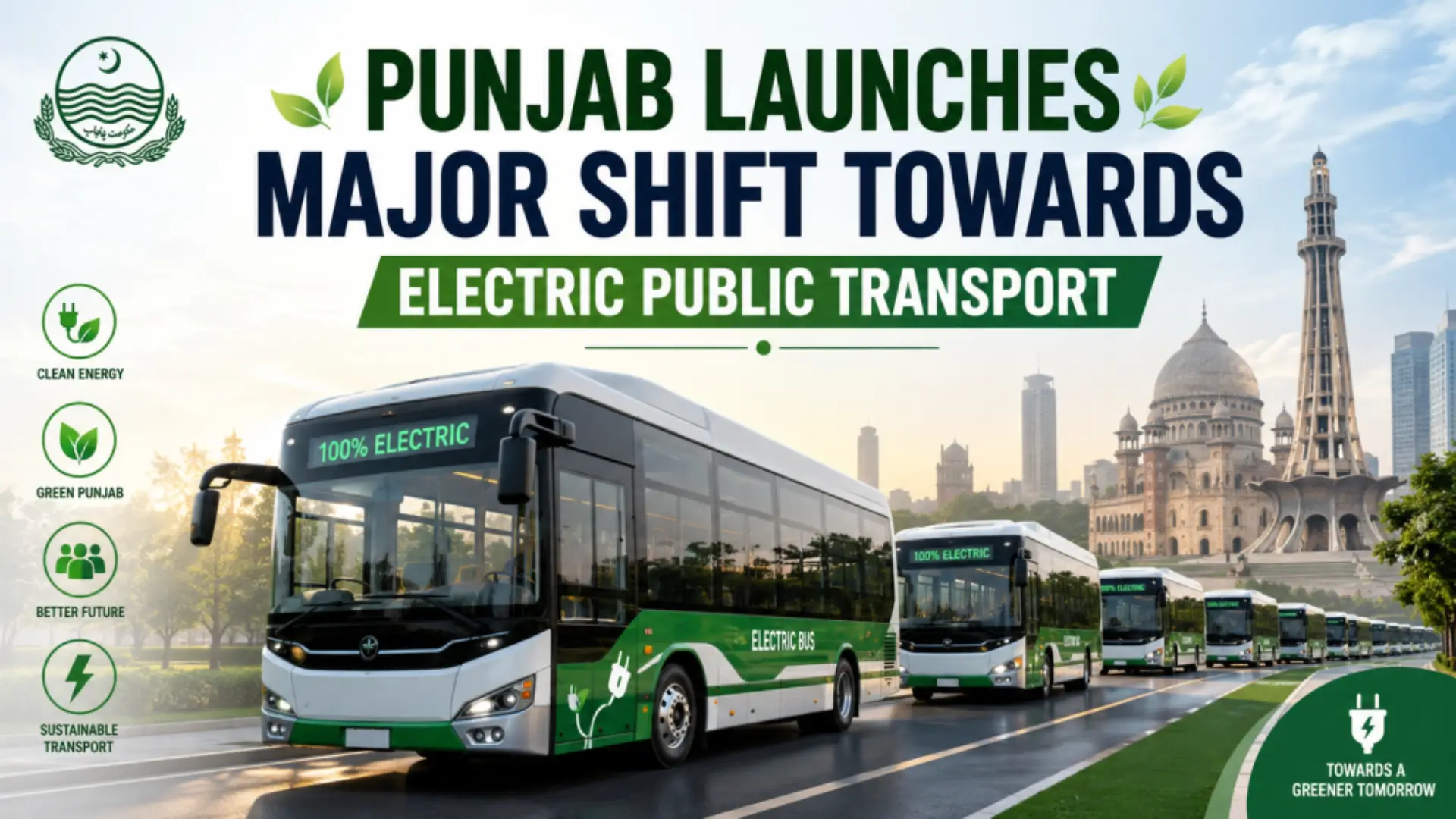
Major Shift Towards Electric Public Transport. The Punjab government has announced plans to replace conventional fuel-powered buses with modern electric buses as part of its commitment to environmentally friendly and sustainable public transportation. The initiative, led by the Punjab Mass Transit Authority (PMTA), aims to reduce carbon emissions, improve air quality, and provide commuters with cleaner and more efficient travel options.
The move marks another significant step in Punjab’s broader strategy to modernize its transport infrastructure and support green energy solutions across the province.
PMTA Begins Process for Electric Bus Transition
According to officials, the Punjab Mass Transit Authority has formally initiated the process of transitioning its public transport fleet from diesel and fuel-powered vehicles to fully electric buses. The authority believes that adopting electric mobility will help create a cleaner and more sustainable transportation network while lowering the environmental impact of public transit operations.
To move the project forward, PMTA has invited applications from qualified companies and firms interested in participating in the electric bus program. The pre-qualification process is scheduled to commence on July 16, 2026.

Eligibility Criteria for Interested Companies
The authority has outlined strict requirements for companies seeking to participate in the project. Applicants must demonstrate prior experience in supplying 12-meter fully electric buses and show a proven track record in managing electric vehicle operations.
In addition, interested firms must provide evidence of their ability to supply genuine spare parts and offer comprehensive repair and maintenance services for electric buses. These requirements are intended to ensure long-term reliability and uninterrupted transport services for passengers.
Installation of Charging Infrastructure
A key component of the project involves the development of charging infrastructure across the transit network. The selected companies will be responsible for installing and commissioning charging stations required for the operation of the electric bus fleet.

Reliable charging facilities are considered essential for maintaining efficient operations and ensuring that buses remain available for daily commuter services without disruptions.
Driver Training and Operational Support
Beyond supplying vehicles and infrastructure, successful bidders will also be tasked with providing driver training programs and operational support services.
Officials emphasized that proper training is necessary to ensure safe and efficient handling of electric buses. Drivers and technical staff will receive specialized instruction on vehicle operation, charging procedures, maintenance protocols, and safety standards.

Supporting Pakistan’s Growing EV Industry
The decision comes at a time when Pakistan is increasingly encouraging the adoption of electric vehicles (EVs). Recent government measures, including tax incentives and reduced duties on certain EV-related imports, are designed to accelerate the country’s transition toward cleaner transportation technologies.
Industry experts believe that large-scale public transport electrification projects can significantly boost confidence in electric mobility and encourage wider EV adoption among consumers and businesses.
Environmental Benefits of Electric Buses
Electric buses offer several environmental advantages over traditional fuel-powered vehicles, including:

- Reduced greenhouse gas emissions
- Improved urban air quality
- Lower noise pollution
- Reduced dependence on imported fuels
- Lower long-term operating costs
By replacing conventional buses with electric alternatives, Punjab aims to create a more sustainable transportation system that benefits both commuters and the environment.
Vision of Chief Minister Maryam Nawaz
Officials stated that the project aligns with the vision of Punjab Chief Minister Maryam Nawaz Sharif, who has emphasized the importance of modernizing public services while promoting environmentally responsible development.
The electric bus initiative is expected to contribute toward the creation of a carbon-free public transport system and support Punjab’s long-term environmental and economic goals.

Conclusion
Punjab’s decision to replace fuel-powered buses with electric buses represents a major milestone in the province’s journey toward sustainable transportation. Through the introduction of modern electric vehicles, charging infrastructure, and specialized operational support, the Punjab Mass Transit Authority aims to provide cleaner, safer, and more efficient public transport services. As the project moves forward, it has the potential to transform urban mobility, reduce pollution, and establish a greener future for millions of commuters across Punjab.